26 July، 2026
The master thesis examines the improvement of the efficiency of heterogeneous solar cells (ZnS/Si) using various deposition methods
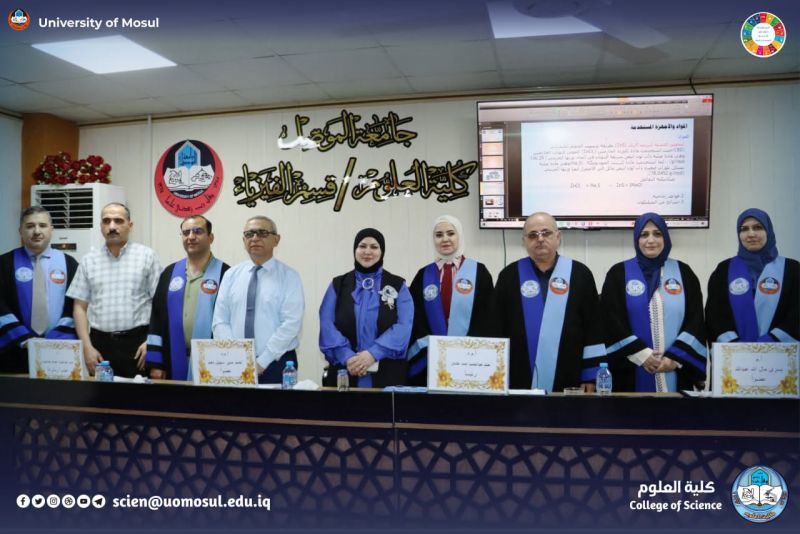
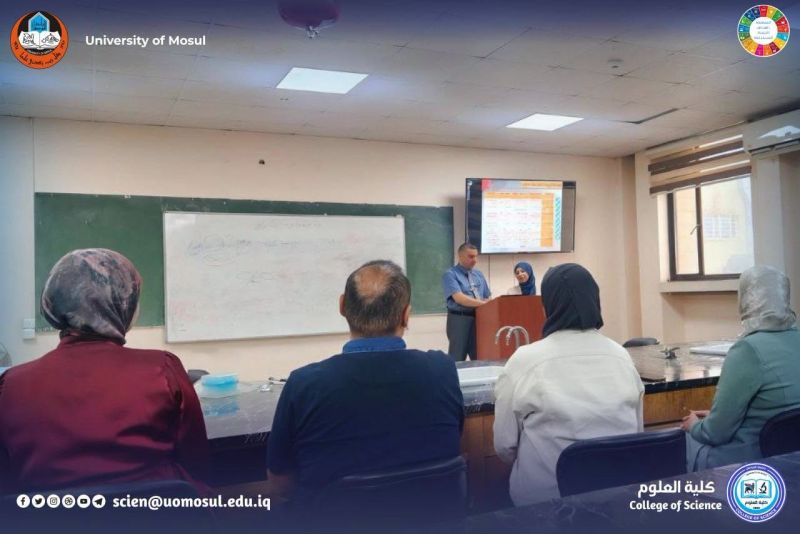
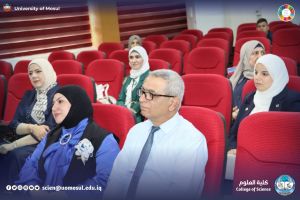
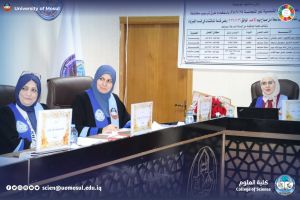
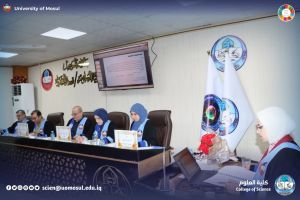
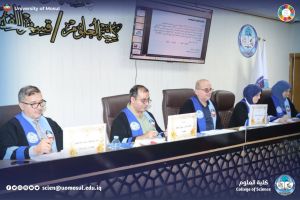
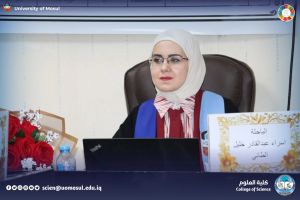
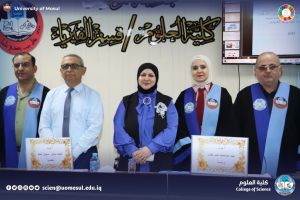
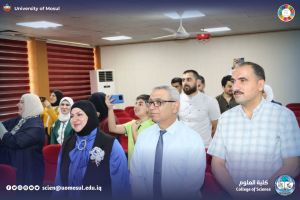
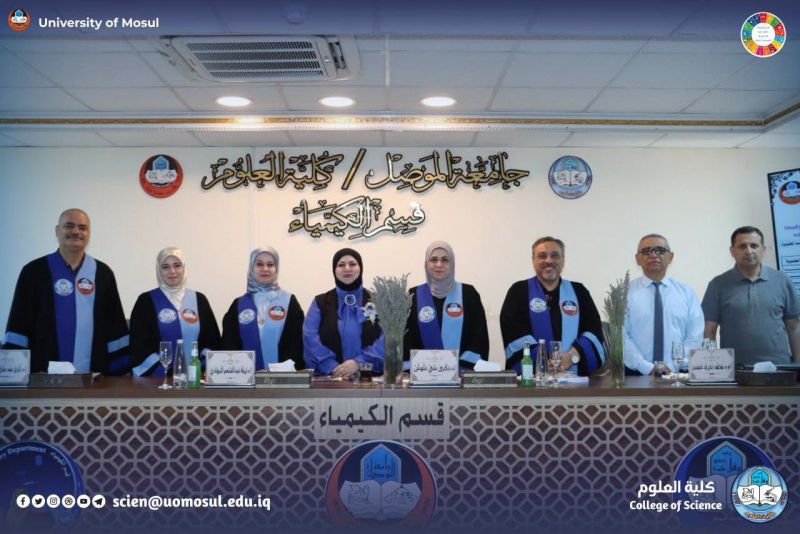
On Sunday, July 26, 2026, the Department of physics at the Faculty of science at the University of Mosul discussed the master’s thesis tagged ” improving the efficiency of heterogeneous solar cells (ZnS/Si) using different deposition methods ” presented by master’s student Israa Abdulkader Khalil. The dean of the Faculty of Science, Prof. Dr. Hiam Adel Ibrahim, and the Administrative Assistant, Prof. Dr. Mohammed Sobhi, along with a number of physics department teachers and graduate students, attended part of the discussion. The purpose of the thesis was to prepare thin films of zinc sulfide (ZnS) and to study the effect of various deposition methods in their synthetic and optical properties, up to improving the performance of heterogeneous solar cells (ZnS/Si). The study adopted two experimental tracks, the first included the preparation of membranes by chemical Bath deposition technology (chemical Bath Deposition – CBD) to study the effect of sodium sulfide concentration, deposition temperature, annealing conditions, while the second track dealt with the preparation of membranes using low-frequency plasma induced atomization (LF-PIS) technology, and studying the effect of deposition time in the properties of membranes and the performance of solar cells. The results showed that different preparation conditions had a direct impact on the microscopic and crystalline structure and optical properties of the membranes, as increasing the concentration and deposition temperature contributed to improving Crystal Growth and changing the grain size, as reflected on the energy gap and optical permeability values. The study showed that the membranes prepared under optimal conditions possess optical properties suitable for solar cell applications. The study also found the manufacture of heterogeneous junction (ZnS/Si) showed a clear light response, with the recording of the best performance of solar cells at specific deposition conditions, while the efficiency decreased by increasing the deposition time as a result of increasing the thickness of the membranes, which provides important scientific indicators for the development of photovoltaic devices and raising their efficiency in solar energy applications. The discussion Committee was chaired by Assistant Professor Dr. Haitham Abdul Hamid Ahmed, and the membership of both assistant professor Dr. Ahmed Munir Suhail, and assistant professor Dr. Yusra Malallah Abdullah, while the teacher Dr. Huda Mohammed Munir supervised the thesis and participated as a member of the discussion Committee, along with Professor Dr. Yasser Abdul Jawad Abdullah supervisor and member. We wish our dear students continued success and success. Government information and Communication Division Sunday, July 26, 2026
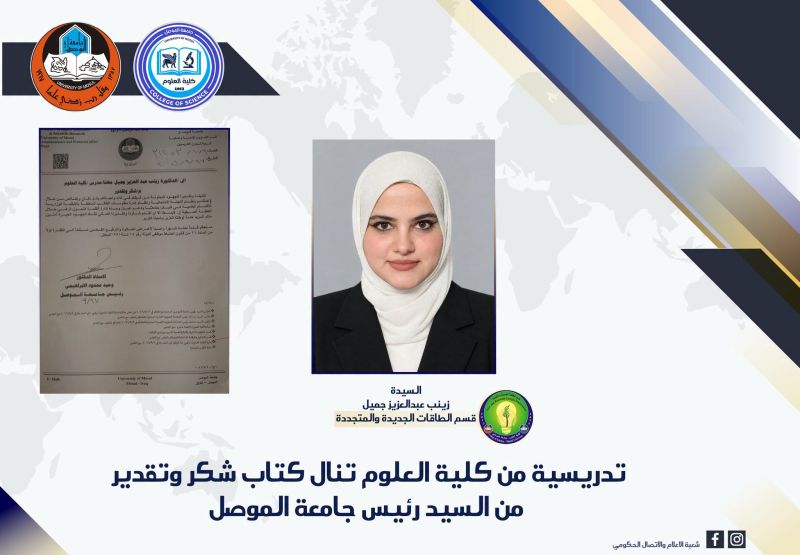
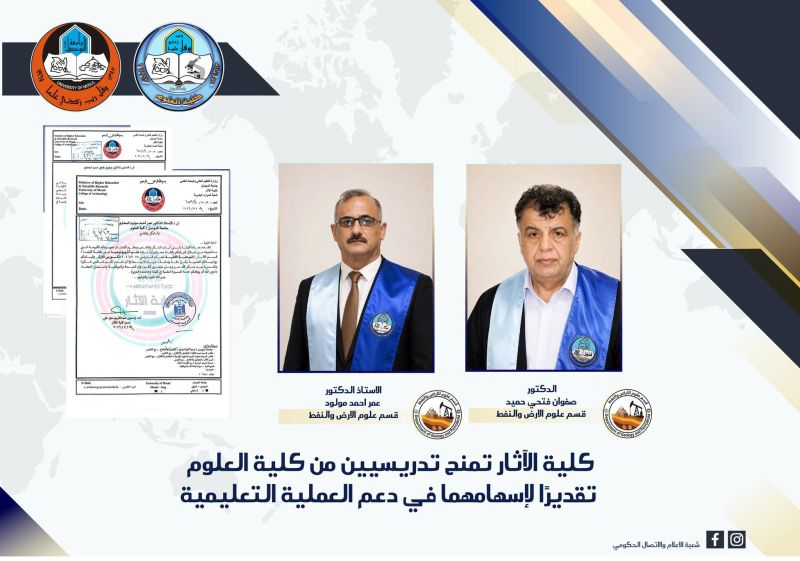 The Faculty of Archaeology grants two teachers from the Faculty of Science two letters of thanks and appreciation in recognition of their contribution to supporting the educational process
 Master thesis discusses a phenotypic and genetic study of pathogenic bacteria isolated from bedsore infections