BP – Department of Computer Networks
Bologna Process

Department of Computer Networks
The Bachelor of Science (B.Sc.) in Networks Science at the University of Mosul is a four-year, full-time undergraduate program comprising 240 ECTS credits and delivered in accordance with the Bologna Process. The program prepares students for professional careers in computer networks and related digital technologies through an integrated curriculum covering networking principles and architectures, data communications, network protocols, routing and switching, network programming, wireless and mobile computing, network modelling and simulation, cybersecurity and network security, distributed and cloud systems, server administration, network management and monitoring, Internet of Things (IoT), data science, artificial intelligence, web development, and mobile application development. The curriculum combines theoretical study with laboratory work, programming, projects, seminars, practical activities, and summer internship. Graduates are prepared to design, configure, administer, monitor, troubleshoot, optimize, and secure computer networks and to develop network-connected applications. The program also promotes analytical thinking, teamwork, communication, ethical responsibility, innovation, lifelong learning, and readiness for postgraduate study
Academic Program and Course Descriptions Guide 2025–2026
1. Provide students with a strong foundation in computer networking principles, protocols, architectures, and technologies, enabling them to understand and analyze network configurations and systems.
2. Equip students with the ability to design and implement secure, efficient, scalable, reliable, and high-performance computer networks.
3. Develop competencies in network administration, management, monitoring, troubleshooting, and optimization to support reliable network operation.
4. Prepare students to develop network-connected applications, including web, mobile, and IoT solutions, and to use networks for effective data exchange.
5. Develop knowledge and practical awareness of network and cybersecurity concepts, vulnerabilities, threats, and appropriate protection measures.
6. Foster effective teamwork, communication, and collaboration skills for multidisciplinary technical environments.
7. Instill professionalism and ethical responsibility, including integrity, privacy, and responsible decision-making in network design, management, and use.
8. Promote lifelong learning and continuous professional development so graduates can adapt to emerging networking technologies and industry trends.
Upon successful completion of all program requirements, graduates are awarded the Bachelor of Science (B.Sc.) in Networks Science by the University of Mosul.
The program is classified at Level 6 of the Iraqi National Qualifications Framework (INQF), or its equivalent, in accordance with the regulations and guidelines of the Ministry of Higher Education and Scientific Research and the University of Mosul.
Admission to the Bachelor of Science (B.Sc.) in Networks Science program is governed by the approved admission policies and regulations of the Ministry of Higher Education and Scientific Research and the University of Mosul. Applicants must satisfy the admission requirements applicable to the College of Computer Science and Mathematics and the Networks program.
• Successful completion of 240 ECTS credits distributed over eight semesters (30 ECTS per semester).
• Successful completion of all compulsory and other approved modules in the curriculum.
• Successful completion of the graduation project requirements.
• Successful completion of the required four-week summer internship.
• Compliance with the academic regulations governing assessment, progression, and graduation.
Recognition of Prior Learning (RPL), transfer of academic credits, and course equivalency are considered in accordance with the regulations and instructions of the Ministry of Higher Education and Scientific Research and the University of Mosul.
PLO1 – Comprehensive Understanding: Demonstrate comprehensive understanding of computer network principles, protocols, architectures, and technologies.
PLO2 – Network Design and Implementation: Design, configure, and implement secure and efficient computer networks while considering scalability, reliability, and performance.
PLO3 – Network Administration and Management: Administer, monitor, troubleshoot, and optimize network infrastructures to support reliable and effective operation.
PLO4 – Network Security: Demonstrate knowledge of network security concepts and practices and apply appropriate measures to protect networks from vulnerabilities and threats.
PLO5 – Application Development: Design and implement network, smartphone, web-based, and network-connected applications that address real-world requirements.
PLO6 – Collaboration and Communication: Work effectively in multidisciplinary teams and communicate networking concepts and technical information to diverse stakeholders.
PLO7 – Professionalism and Ethical Practices: Apply professional and ethical standards in network design, management, security, and use, demonstrating integrity and responsible decision-making.
PLO8 – Lifelong Learning: Engage in continuous learning and professional development to adapt to emerging network technologies and evolving industry trends.
The program is aligned with Level 6 of the Iraqi National Qualifications Framework. The following matrix maps the program learning outcomes to the principal learning domains. Learning Domain Program Learning Outcomes
Knowledge and Understanding
Demonstrate comprehensive knowledge of networking principles, protocols, architectures, programming foundations, security concepts, and related digital technologies. (PLO1, PLO4)
Skills
Apply technical, analytical, programming, configuration, monitoring, troubleshooting, modelling, and security skills using appropriate networking tools and technologies. (PLO2, PLO3, PLO4, PLO5)
Application
Apply knowledge and technical skills to design, implement, administer, secure, evaluate, and improve computer networks and network-connected applications in practical contexts. (PLO2, PLO3, PLO4, PLO5)
Values
Demonstrate communication, teamwork, ethical responsibility, professionalism, self-development, and commitment to lifelong learning. (PLO6, PLO7, PLO8)
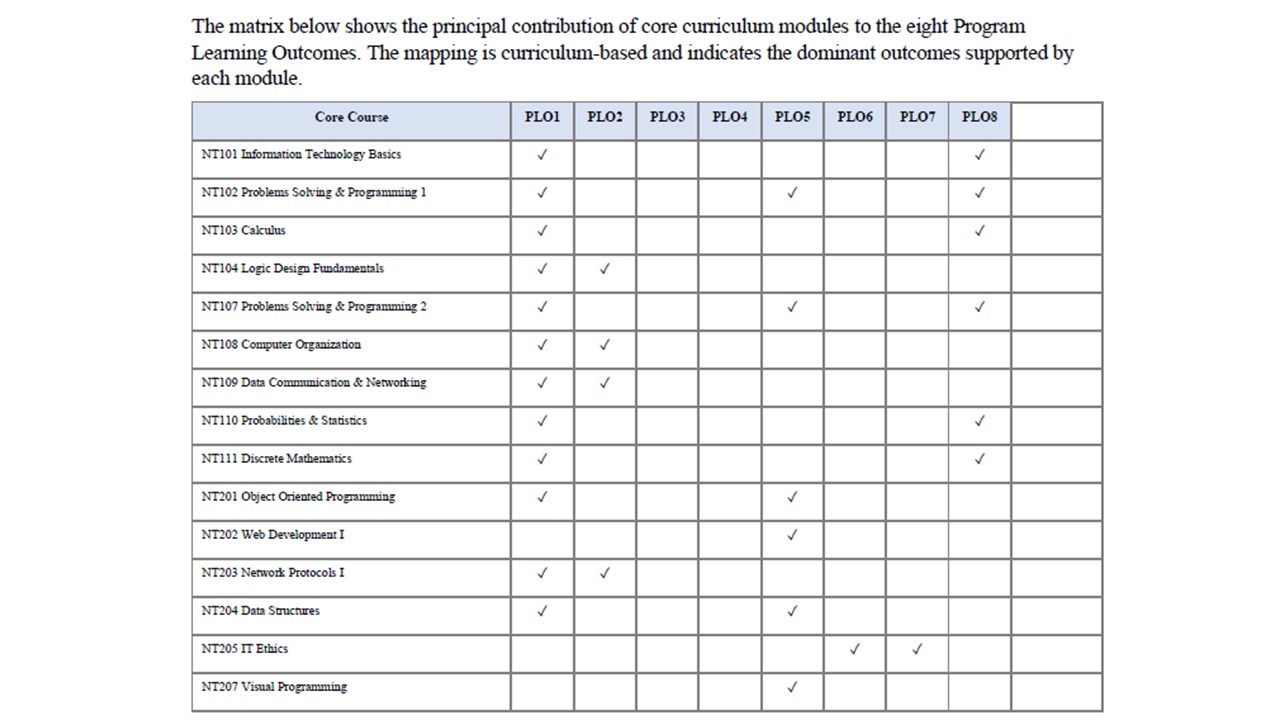
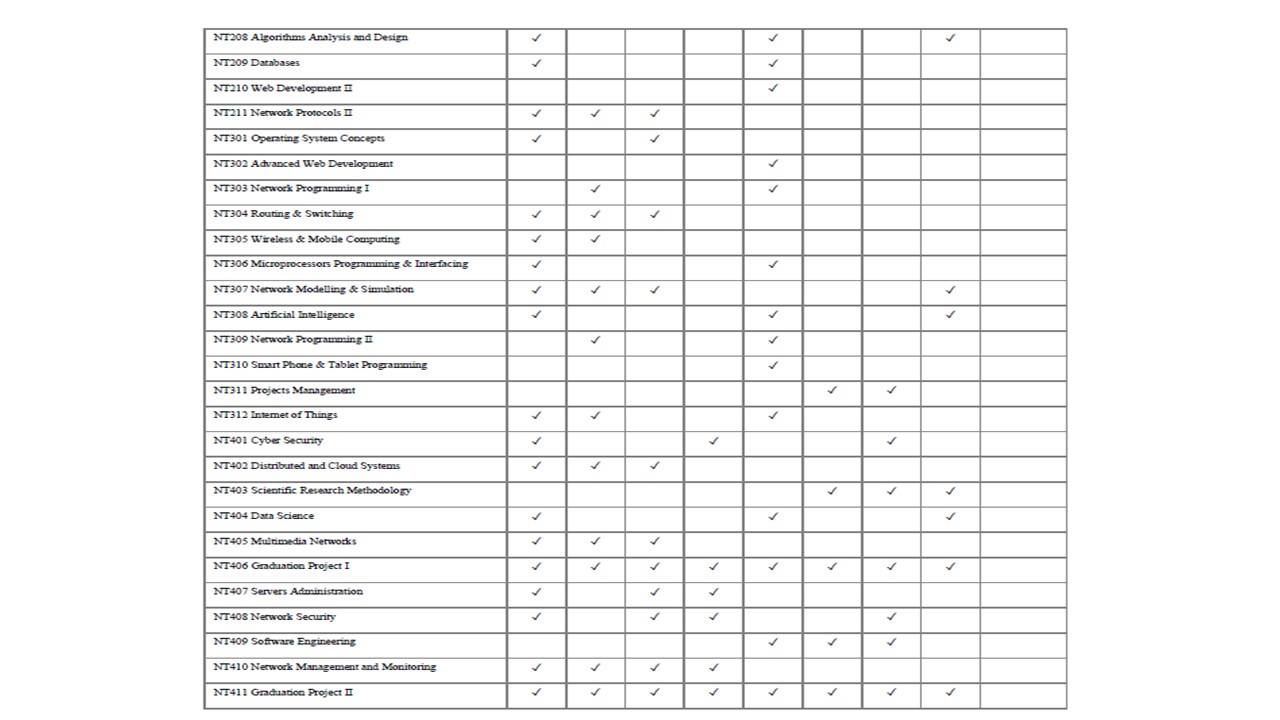
Graduates of the Bachelor of Science (B.Sc.) in Networks Science are prepared for technical and professional roles in public and private organizations that rely on networked information systems. Potential occupational areas include:
• Computer network design, implementation, and support.
• Network administration, monitoring, troubleshooting, and performance management.
University of Mosul – College of Computer Science and Mathematics – Department of Networks
• Network and cybersecurity support and security operations.
• Server and systems administration.
• Cloud and distributed systems support.
• Telecommunications and Internet service environments.
• Network programming and development of network-connected applications.
• Web and mobile application development.
• IoT systems and connected-device solutions.
• IT support, technical consulting, and related digital infrastructure roles.
• Research and academic careers following completion of postgraduate studies.
Graduates may pursue postgraduate study and professional development in areas related to the program, subject to applicable admission regulations. Relevant fields may include computer networks, network security and cybersecurity, computer science, distributed and cloud computing, Internet of Things, data science, artificial intelligence, and related computing disciplines.
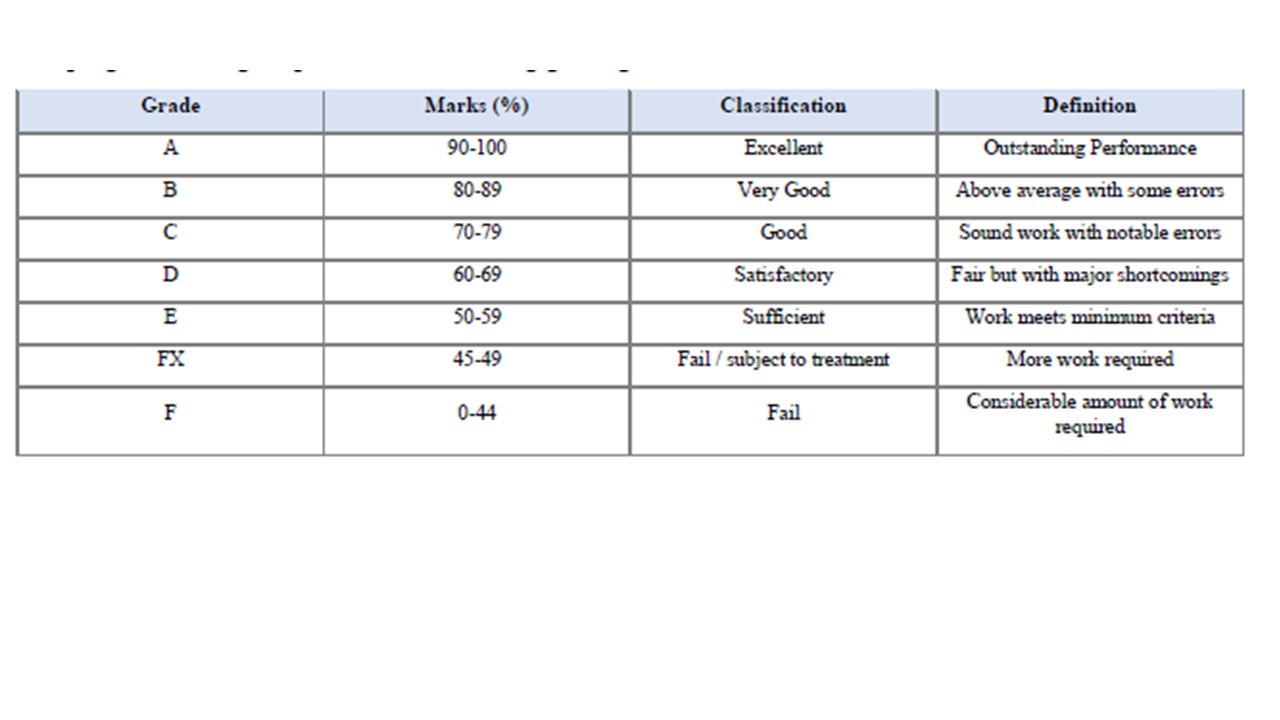
Student achievement is evaluated in accordance with the Bologna Process regulations adopted by the University of Mosul and the applicable Ministry and University instructions. Assessment may include continuous assessment, quizzes, assignments, classroom activities, midterm and final examinations, laboratory and practical assessments, programming work, reports, projects, seminars, presentations, and graduation project evaluation.
The program catalogue specifies the following grading scheme:
• Complete all 240 ECTS credits across the eight-semester curriculum.
• Successfully complete all required modules and satisfy the applicable progression and pass requirements.
• Successfully complete Graduation Project I and Graduation Project II.
• Complete the required four-week summer internship.
• Fulfill all academic and administrative requirements prescribed by the Ministry of Higher Education and Scientific Research and the University of Mosul.
The Bachelor of Science (B.Sc.) in Networks Science is a four-year, full-time program delivered over eight semesters under the Bologna Process. Each semester carries 30 ECTS credits, for a total of 240 ECTS. One ECTS credit represents 25 hours of student workload, including structured and unstructured learning activities. The program combines class lectures, laboratory activities, practical training, tutorials and seminars where specified, independent study, projects, and other student-centered learning activities.
The Program Coordinator of the Bachelor of Science (B.Sc.) in Networks Science is responsible for coordinating the implementation and continuous improvement of the program, monitoring curriculum delivery and achievement of the Program Learning Outcomes, coordinating academic activities, supporting practical and project-based learning, and ensuring alignment with University of Mosul quality assurance requirements, Ministry of Higher Education and Scientific Research regulations, Bologna Process requirements, and relevant academic standards. The coordinator also supports periodic curriculum review to maintain responsiveness to developments in networking, cybersecurity, cloud computing, IoT, artificial intelligence, and related technologies.