8 January، 2026
Master’s Thesis Defense at the Department of Arabic Language
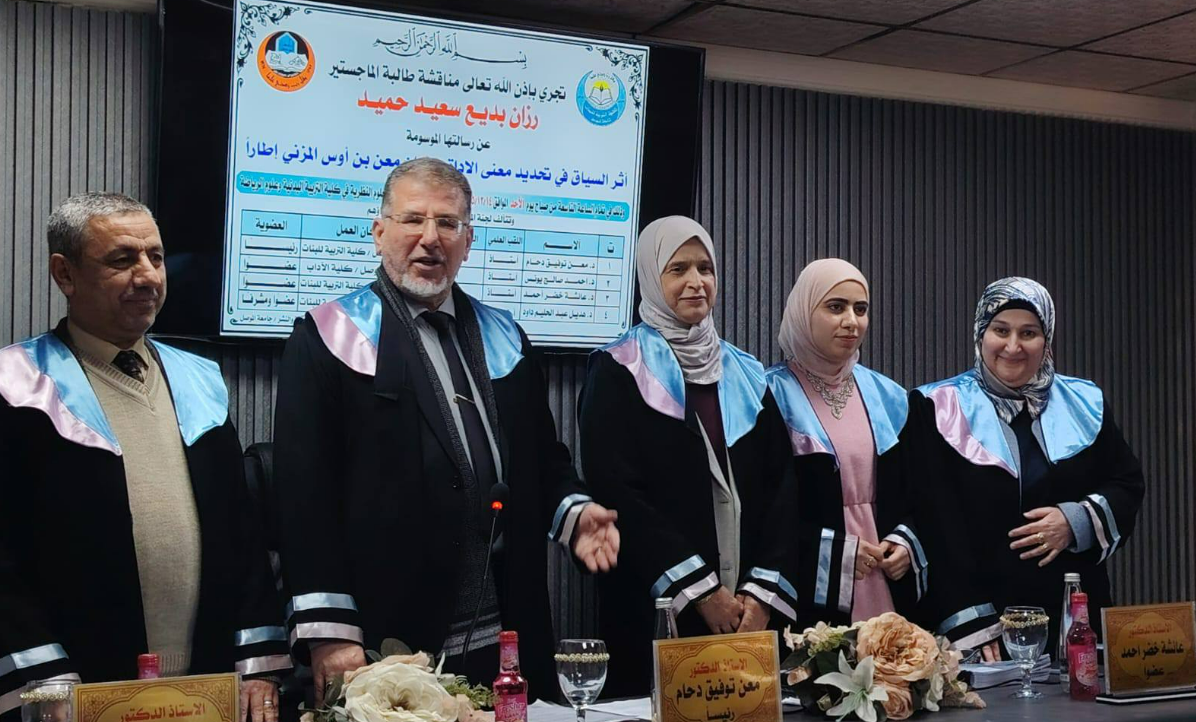
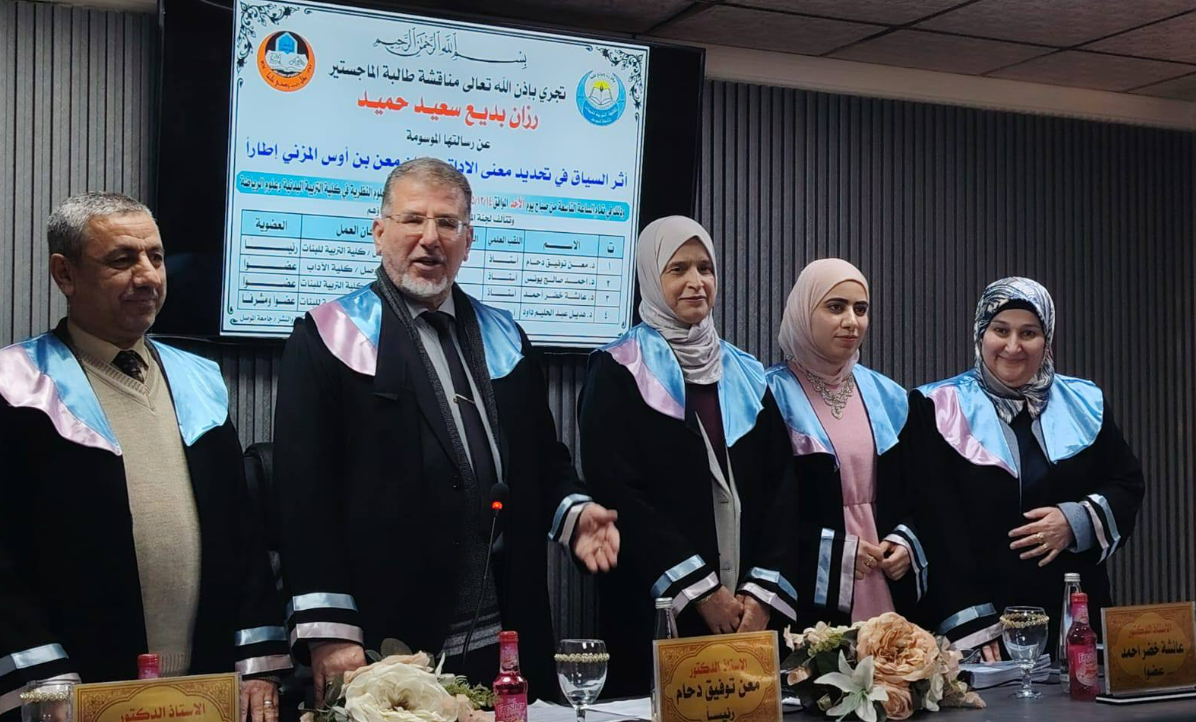
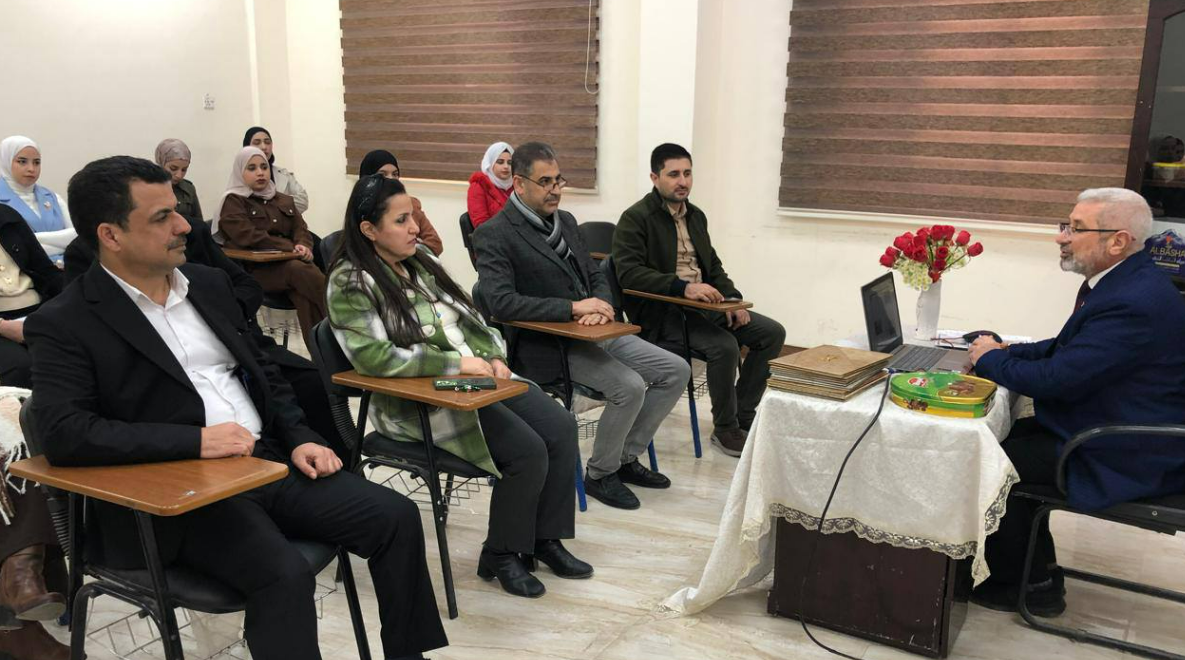
The Department of Arabic Language at the College of Education for Women, University of Mosul, witnessed on Sunday, December 14, 2025, the defense of a master’s thesis entitled
“The Impact of Context on Determining the Meaning of the Particle: The Diwan of Maan ibn Aws al-Muzani as a Case Study”, submitted by the student Razan Badi Saied.
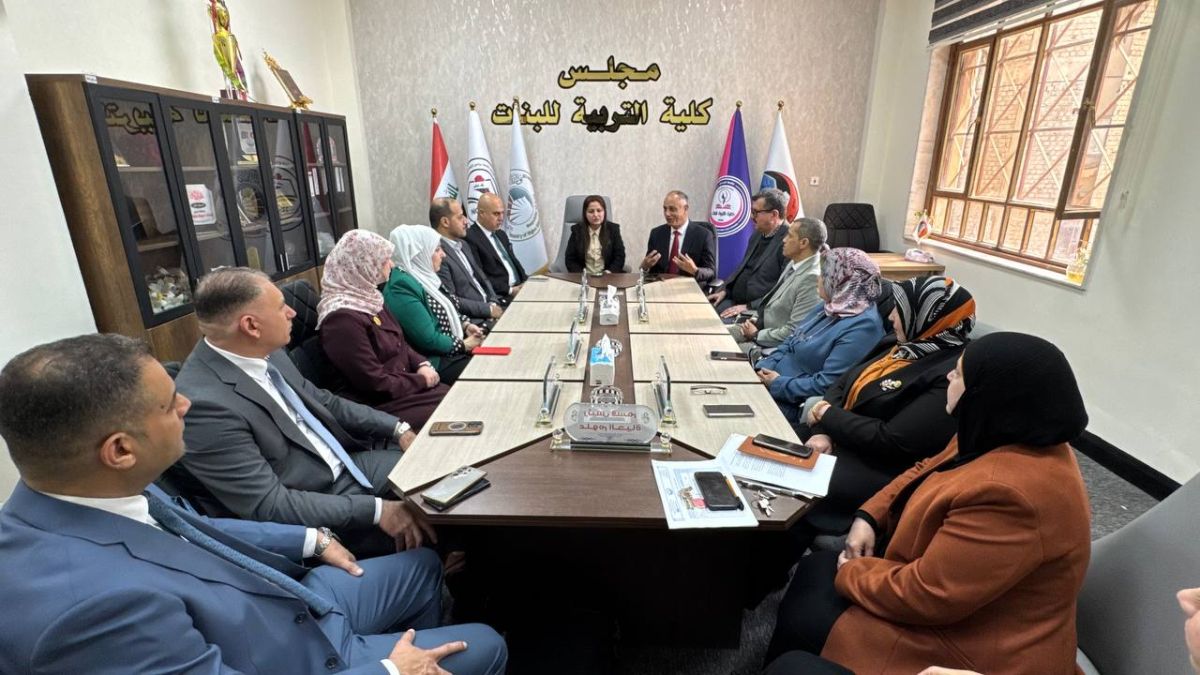
Part of the defense session was attended by the Dean of the College, Assistant Professor Dr. Shatha Hazim Korkis, and the Head of the Department of Arabic Language, Professor Dr. Mohammed Ismail Al-Mashhadani, as well as some faculty members and postgraduate students.
The thesis addressed the importance of context and its decisive role in determining the semantic value and grammatical function of particles. It demonstrated that the poet Maan ibn Aws al-Muzani employed grammatical particles in his Diwan with great precision, which added linguistic and rhetorical depth to his poetry. The study also revealed variation in the frequency of grammatical particles used in the Diwan; pronouns ranked first in terms of usage, followed by prepositions, conjunctions, copulative verbs, non-jussive negation, and conditional particles, as well as particles of verification and futurity, in addition to other grammatical tools that contributed to sentence structure and meaning clarification.
The examining committee consisted of:
• Prof. Dr. Maan Tawfiq Daham – College of Education for Women, University of Mosul – Chair
• Prof. Dr. Ahmed Saleh Younis – College of Arts, University of Mosul – Member
• Prof. Dr. Aisha Khidr Ahmed – College of Education for Women, University of Mosul – Member
• Prof. Dr. Hadeel Abdulhalim Dawood – College of Education for Women, University of Mosul – Member and Supervisor
Following a rigorous academic discussion and the student’s defense of her thesis, the committee approved the thesis and awarded the researcher a Master’s degree with a grade of Very Good (High).
This academic activity aligns with the Sustainable Development Goals, particularly:
• Goal 4: Quality Education
(Promoting scientific research and humanities studies)
• Goal 9: Industry, Innovation, and Infrastructure
(Encouraging research and innovation in linguistic studies)
• Goal 16: Peace, Justice, and Strong Institutions
(Strengthening knowledge and building sound educational institutions)