19 October، 2026
Seminar titled “An Overview of Time Series,” presented by the Department of Operations Research and Intelligent Technologies
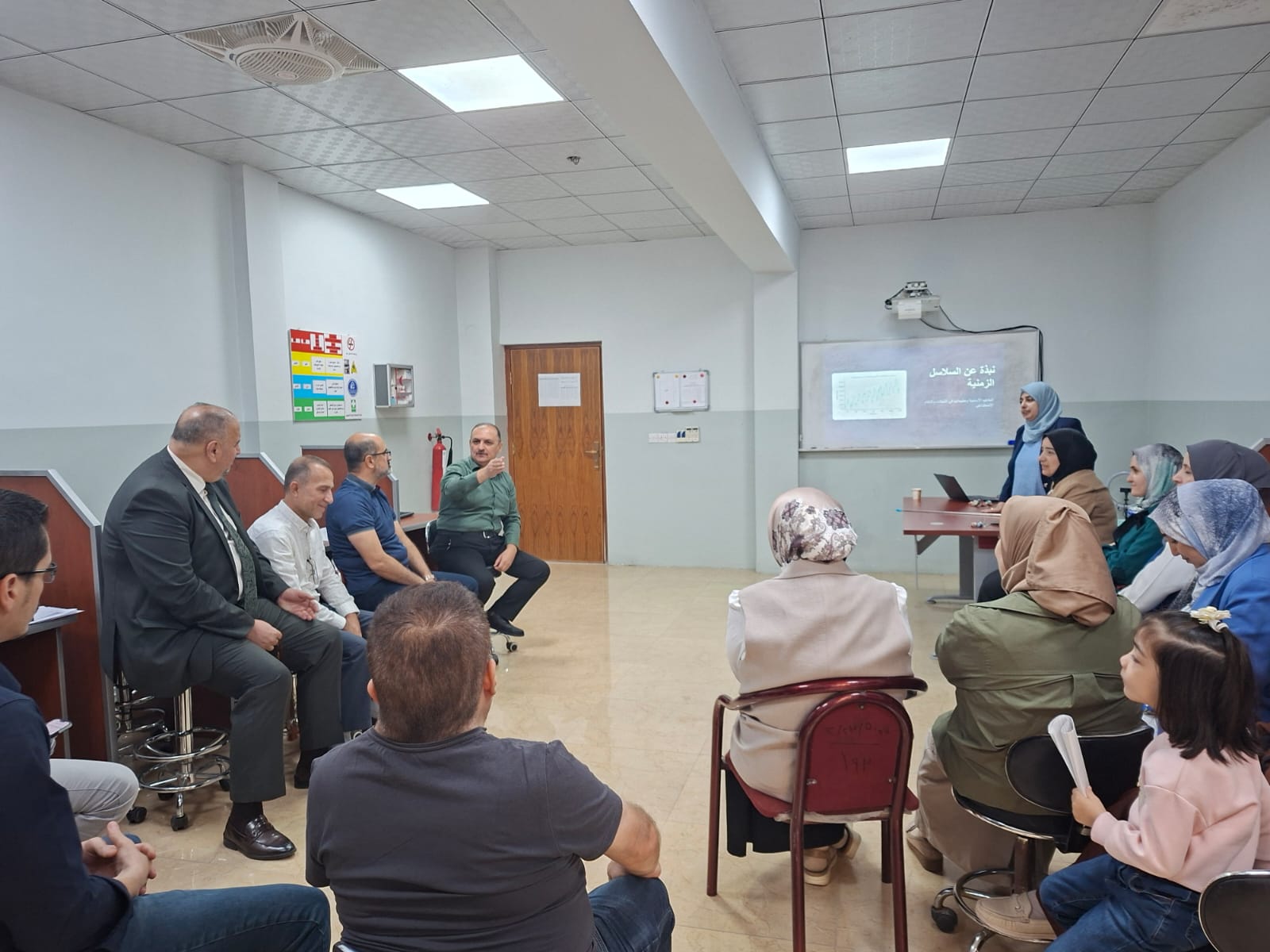
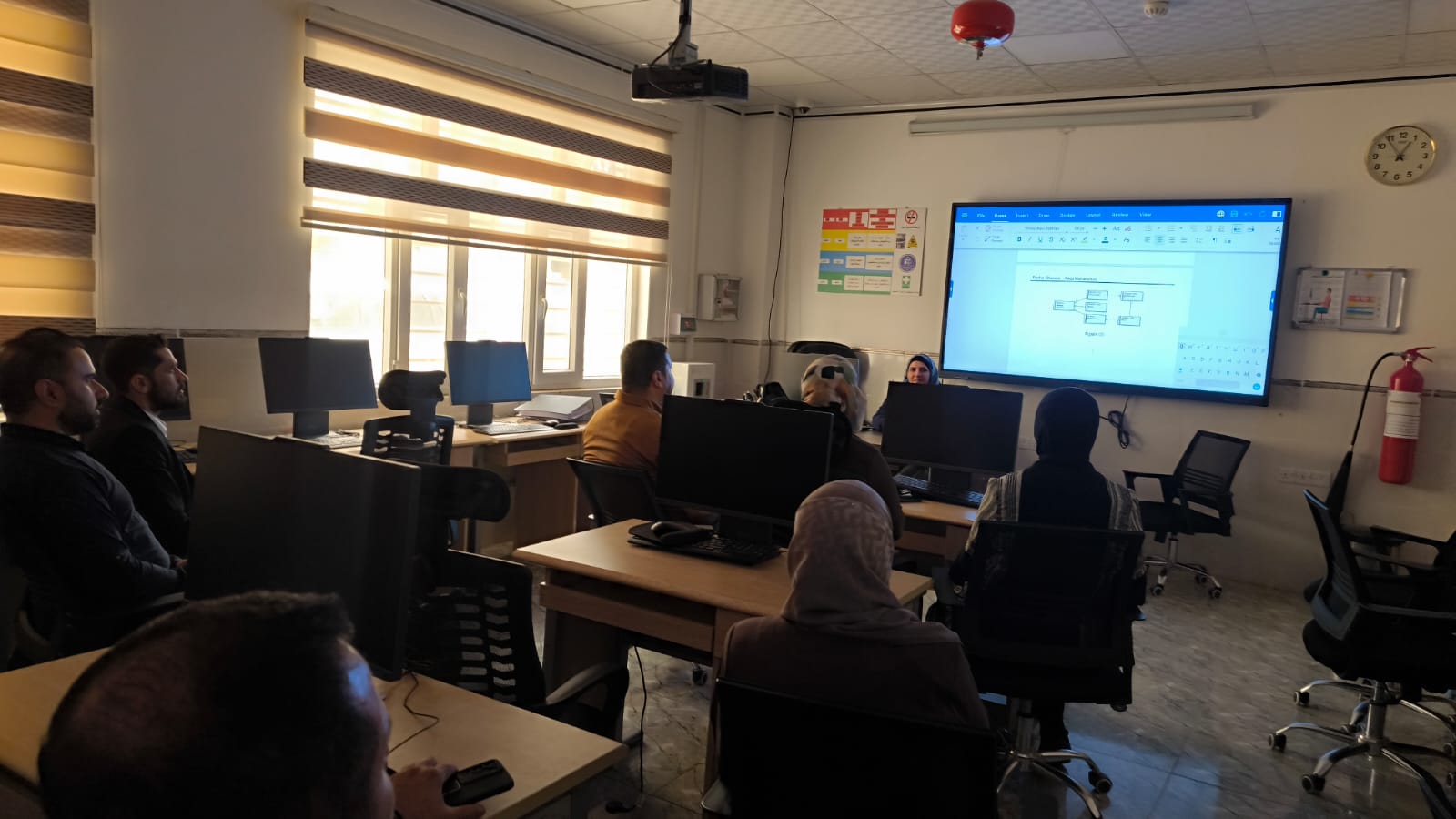
On Thursday, October 15, 2026, the Department of Operations Research and Intelligent Techniques at the College of Computer Science and Mathematics held a seminar titled “An Overview of Time Series.”
The seminar was presented by Dr. Manal Salem Hamdi and was attended by a number of the department’s faculty members and researchers. The seminar addressed the topic of time series—sequences of observations recorded chronologically at equal intervals, where each value depends on preceding ones—such as temperature readings, stock prices, electricity consumption, and network traffic. The presentation explained that a time series consists of a general trend, seasonality, and random residuals. Since most classical models require the series to be stationary, the data must first be preprocessed using techniques such as differencing, normalization, sliding windows, and the handling of missing or anomalous values. The discussion then moved to forecasting models, covering classical statistical approaches—like ARIMA, SARIMA, and exponential smoothing—as well as machine learning and deep learning models, including LSTM, XGBoost, Transformers, and foundation models. Regarding practical applications, the presentation highlighted the use of time series in network environments for traffic forecasting, capacity planning, load balancing, and the detection of anomalies or attacks, such as Distributed Denial of Service (DDoS). It also explored applications in artificial intelligence, including predictive maintenance, the Internet of Things (IoT), and healthcare. The seminar concluded by noting that statistical models and deep learning models complement one another, while also highlighting challenges such as data drift, noise, and the requirement for real-time forecasting with low latency. The seminar concluded that a time series consists of chronologically ordered observations—comprising a general trend, seasonality, and residuals—which are analyzed using a combination of statistical models and deep learning techniques. These are applied within networks and artificial intelligence systems for forecasting and anomaly detection, despite challenges such as data drift and noise.
This scientific seminar addresses topics that directly intersect with several of the United Nations Sustainable Development Goals (SDGs), most notably:
Energy (Goal 7): Forecasting electricity consumption and energy prices helps reduce waste and supports the use of renewable energy.
Health (Goal 3): Analyzing cardiac signals and monitoring patients enables the early detection of critical medical conditions.
Industry and Infrastructure (Goal 9): Predictive maintenance and network capacity planning enhance efficiency while minimizing system failures and waste.
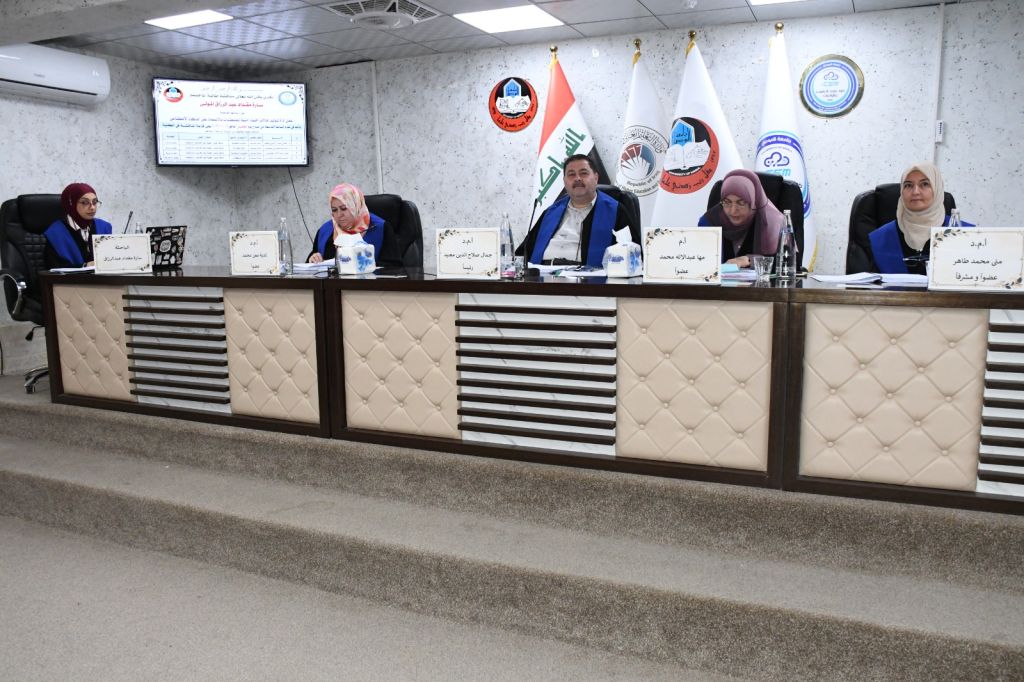 Master's Thesis Student: Sarah Mekdad Abdurazak